As industries demand finer powders, Ultrafine Iron Oxide Grinding is becoming a precision process, not simply a size-reduction step. Iron oxide supports pigments, ceramics, construction materials, battery research, and advanced coatings. The U.S. Geological Survey’s Mineral Commodity Summaries 2025 confirms iron oxide pigments remain commercially important across several manufacturing sectors. However, the report does not define one universal ultrafine specification. That gap matters.
Market estimates also show strong interest. Grand View Research and MarketsandMarkets report continued growth in the global iron oxide market, driven by construction, coatings, plastics, and engineered materials. Their figures differ because research boundaries and regional data vary. Data are not perfectly comparable. Still, the direction is clear: producers want narrower particle-size distributions, stable color, lower contamination, and controlled energy use.
The 2026 Top Ultrafine Iron Oxide Grinding Equipment review should examine jet mills, stirred media mills, classifier systems, and integrated air-separation lines. A practical evaluation must include feed moisture, hardness, throughput, heat generation, wear resistance, and cleaning requirements. ISO 13320 provides a recognized framework for particle-size analysis, helping buyers compare laboratory results more reliably. Real production conditions remain decisive. A machine producing 2-micron powder in a brochure may perform differently with humid feedstock, abrasive liners, or continuous operation. Experienced engineers should verify results through pilot testing, sampling, and independent laboratory measurement. No equipment is perfect. The best choice balances fineness, capacity, maintenance, product purity, and total operating cost for the intended application.
Ultrafine iron oxide grinding equipment reduces iron oxide into very small, controlled particles. In many applications, ultrafine means particles below 10 microns, although the exact target depends on product requirements. The equipment usually combines a grinding chamber, high-speed rotor, air flow, and an internal classifier. Grinding breaks down coarse powder, while the classifier separates acceptable particles from larger ones. Oversized material returns for further processing. Fine material leaves through the collection system.
In practical plant trials, operators monitor feed moisture, mill temperature, air pressure, and motor load. These details matter. Excess moisture can cause coating inside the chamber. High heat may change powder flow or surface behavior. A stable classifier setting often improves particle-size consistency, but it cannot correct poor feeding. Dust collection also requires careful inspection, especially around seals and discharge points. No system is perfect. Some test results look excellent, yet production may reveal uneven wear or unexpected buildup.
Tips: Request a particle-size test using your actual iron oxide sample. Compare the feed rate, energy use, final fineness, and temperature rise. Check cleaning access before installation. Ask how operators adjust the classifier and replace worn parts. Keep a simple maintenance record. Small differences in raw material can change the result, so repeat testing is wise.
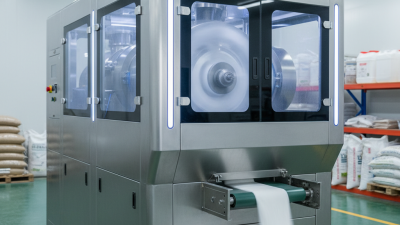
Ultrafine iron oxide grinding reduces coarse particles through controlled impact, shear, and attrition. The feed enters a chamber where grinding media, airflow, or rotating parts create repeated stress. Each collision forms smaller cracks until the particles reach the target size. A classifier then separates fine powder from oversized material. Coarse particles return for another pass.
In practical operation, airflow controls residence time and product temperature. Too much heat can change moisture behavior, color stability, or surface activity. Wet grinding may limit dust, but drying adds another process step. Dry systems require stable feed moisture and careful sealing. I have found that feed consistency often matters more than maximum rotor speed. Faster is not always better. This point deserves more testing.
Tips:
Different iron oxide grades may respond differently because hardness, agglomeration, and surface chemistry are not identical. Laboratory trials should measure particle distribution, throughput, energy use, and color performance. A narrow particle range may improve dispersion, but excessive grinding can increase energy demand and create unwanted agglomerates. Technicians should record each adjustment. Small process notes can prevent expensive repetition.
Ultrafine iron oxide processing commonly uses jet mills, stirred media mills, and air classifier mills. Each machine creates fine particles through a different energy pattern. A fluidized-bed jet mill uses compressed air to accelerate particles through narrow nozzles. Particle-on-particle collisions cause rapid breakage. An internal classifier removes oversized material and returns it for further grinding. This design reduces mechanical contact and limits contamination.
Stirred media mills work differently. A rotating agitator moves small ceramic or hardened media through a liquid slurry. Repeated impact and shear reduce iron oxide particles to submicron sizes. Cooling jackets help control heat during long production cycles. This matters because excessive temperature can change slurry viscosity and affect product consistency. The mill’s separator also prevents grinding media from leaving the chamber.
Air classifier mills combine impact grinding with precision classification. A high-speed rotor breaks agglomerates, while an adjustable classifier wheel controls the final cut point. Operators can tune airflow, rotor speed, and feed rate. Small changes can produce noticeable differences. Dry iron oxide may also create dust, so enclosed feeding and effective filtration are essential.
Practical selection is less simple than equipment charts suggest. Moisture, hardness, feed size, and required particle distribution all influence performance. A perfect setting rarely survives a full production shift. Operators should check laser diffraction results, temperature readings, and residue on the chamber walls. One overlooked issue remains common: laboratory results may not match continuous operation. Continuous trials are therefore worth the extra time.
2026 Top Ultrafine Iron Oxide Grinding Equipment
Performance Factors for Iron Oxide Powder Production
Ultrafine iron oxide production depends on more than nominal mill capacity. The USGS Mineral Commodity Summaries 2025 estimates 2024 global iron ore mine production at nearly 2.5 billion metric tons. This scale highlights the need for stable feed preparation and controlled energy use. However, ore volume does not predict pigment performance. Mineral hardness, moisture, and impurity levels can change grinding behavior sharply.
Target particle size matters. A practical d50 range may fall between 1 and 10 micrometers, depending on the application. The European Commission’s mineral processing guidance emphasizes classification, air control, and dust management as key process variables. An efficient dynamic classifier can reduce oversized particles without overgrinding the entire batch. That saves energy. It also improves color consistency.
Heat control is often underestimated. Excess temperature can affect moisture, dispersibility, and shade stability. Operators should track mill outlet temperature, specific energy, particle-size distribution, and residue after classification. ISO 1248 provides terminology and requirements for iron oxide pigments, but it does not replace application testing. A narrow size curve sounds ideal. Yet, it may expose weak dispersion later. In practice, the best equipment balances fineness, throughput, maintenance, and repeatability. Perfect settings rarely exist. Small trials still matter.
Performance factors for iron oxide powder production
The chart shows representative specific energy requirements for producing iron oxide powder at progressively finer median particle sizes. Finer targets generally require higher energy input and stronger classification control, while throughput and temperature management remain important for stable product quality.
2026 Top Ultrafine Iron Oxide Grinding Equipment
How to Select the Right Grinding Equipment in 2026
Selecting ultrafine iron oxide grinding equipment starts with the product target, not the machine catalogue. The 2024 U.S. Geological Survey Mineral Commodity Summaries reported global iron oxide pigment output at roughly 1.5 million metric tons in 2023. This scale increases pressure on energy use, particle consistency, and continuous operation. Define the required D50, D90, brightness, and allowable contamination before requesting quotations. A 1–3 micrometer D50 may require different technology from a 10 micrometer product.
For dry processing, an air-classifier mill can offer size control and simpler material handling. A jet mill suits very fine powders when iron contamination must remain low, but its compressed-air demand can be substantial. For wet processing, a stirred-media mill may achieve narrow particle distributions with lower heat exposure. ISO 13320 recommends laser diffraction for particle-size measurement, yet sampling errors still distort results. Measure several batches.
Look beyond installed power. Record specific energy in kWh per ton, classifier speed, feed moisture, wear rate, and cleaning time during a pilot trial. The U.S. Department of Energy’s Industrial Decarbonization Roadmap identifies process efficiency as a practical emissions-reduction route. I would not select equipment from a single laboratory result. Small tests often hide unstable feeding, clogged screens, or unexpected color changes. Real production data is less attractive, but more trustworthy. Some plants also overlook maintenance access. That mistake becomes expensive.
| Equipment Type | Typical Product Size | Typical Throughput Range | Feed Moisture Suitability | Particle-Size Control | Energy Demand | System Characteristics | Best-Fit Applications | Selection Assessment |
|---|---|---|---|---|---|---|---|---|
| Fluidized-Bed Jet Mill | D50: approximately 2–10 μm | 0.05–5 t/h, depending on material and mill size | Usually requires dry feed; moisture commonly kept below approximately 1% | Excellent; integrated air classification can produce a narrow distribution | High; compressed air or nitrogen is the main operating utility | No grinding media contamination; suitable for heat-sensitive powders; often requires a classifier and dust-collection system | High-purity iron oxide pigments, specialty coatings, cosmetics, electronics, and fine chemical products | Top choice when sub-10 μm powder, low contamination, and a narrow particle-size distribution are priorities |
| Stirred Media Mill | D50: approximately 0.5–10 μm | 0.1–20 t/h in continuous configurations | Suitable for wet grinding; slurry solids content commonly ranges from 30–70% by weight | Excellent; product size can be adjusted through media size, residence time, and operating speed | Moderate to high; generally more efficient than conventional ball milling for ultrafine wet grinding | High surface area and efficient fine grinding; requires media separation, slurry handling, and possible drying | Water-based pigment dispersions, magnetic materials, ceramic formulations, and mineral slurries | Best overall option for continuous wet ultrafine grinding and high solids-content slurries |
| High-Speed Impact Classifier Mill | D50: approximately 5–30 μm | 0.2–15 t/h | Best with dry feed; sticky or damp material may require pre-drying | Very good when equipped with an integrated dynamic classifier | Moderate to high | Combines impact grinding and classification in one dry-processing unit; practical for flexible product grades | General-purpose iron oxide powders, construction materials, fillers, and industrial pigments | Strong choice for dry products requiring approximately 5–30 μm particle sizes and flexible operation |
| Vertical Roller Mill | D50: approximately 10–45 μm | 5–100 t/h or higher, depending on mill size and feed properties | Can accept moderately moist feed; hot gas may be used for simultaneous drying | Good for fine powder, but less suitable for consistently sub-10 μm iron oxide | Low to moderate per tonne at large scale | Compact layout; drying, grinding, and classification can be integrated; high capital requirement for small plants | Large-volume mineral processing, cement-related materials, iron-bearing raw materials, and bulk fillers | Preferred for high-capacity production when the target product is fine rather than truly ultrafine |
| Ball Mill with High-Efficiency Classifier | D50: approximately 10–45 μm; finer products are possible with extended residence time | 1–50 t/h | Primarily dry feed; wet operation is possible with a different system design | Moderate; classification is essential for controlling the upper particle-size limit | High for ultrafine targets because of media and liner losses | Simple and robust; widely understood maintenance practices; larger footprint and higher wear than newer fine-grinding systems | Standard-grade iron oxide, abrasives, fillers, and applications where equipment simplicity is important | Suitable for economical fine grinding, but usually not the first choice for narrow sub-10 μm specifications |
| High-Pressure Grinding Roll | Typically produces a coarse-to-fine crushed product; often requires downstream milling for ultrafine powder | 20–500 t/h or higher in large mineral circuits | Best with relatively dry, free-flowing feed; excessive moisture can affect operation | Not designed as a standalone ultrafine finishing mill | Low to moderate for comminution duty | Efficient size reduction at high capacity; creates microcracks that can reduce downstream grinding work | Pre-grinding of iron-bearing minerals before a ball mill, stirred mill, or classifier mill | Useful as a pre-grinder, but it should normally be combined with a dedicated ultrafine finishing stage |
| Wet Agitated Bead Mill | D50: approximately 0.1–5 μm | 0.02–10 t/h | Designed for liquid slurries; feed rheology and solids concentration are critical | Excellent for submicron and low-micron dispersion products | Moderate to high; strongly influenced by viscosity, media size, and target fineness | Very fine particle production and strong deagglomeration; requires careful control of media wear and product contamination | High-performance pigments, magnetic inks, advanced ceramics, battery-related materials, and specialty coatings | Best when the specification requires sub-5 μm particles or stable high-quality dispersions |
| Selection guidance: Choose a fluidized-bed jet mill for dry, low-contamination powders below approximately 10 μm; choose a stirred media or bead mill for wet ultrafine grinding and submicron dispersion; choose a vertical roller mill or ball mill for higher-volume fine grinding; and use a high-pressure grinding roll mainly as a pre-grinding stage. Actual performance depends on iron oxide grade, hardness, feed moisture, agglomeration, required D50/D97, production capacity, and whether the final product is dry powder or slurry. | ||||||||