Leave Your Message
Choosing the right Fine Jaw Crusher is rarely a simple matter of comparing catalog capacity.
Global buyers face different rocks, climates, budgets, and maintenance conditions. A limestone producer may need a compact machine with sharp product control. A granite quarry may require deeper chambers, stronger frames, and thicker jaw plates. Moist clay can change the decision completely.
Dr. Barry A. Wills, a respected mineral-processing authority, emphasized a practical principle: “The circuit should be designed around the material, not the machine.” This idea remains highly relevant when reviewing jaw crusher types. Buyers should examine feed size, desired discharge, closed-side setting, hardness, moisture, power supply, and liner availability. A machine rated for 100 tonnes per hour may perform differently under wet, abrasive feed. Numbers alone can mislead.
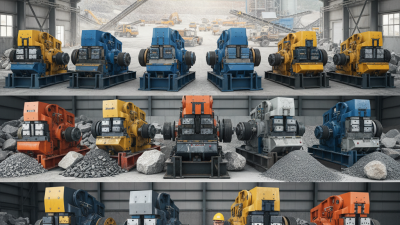
This guide introduces ten Fine Jaw Crusher types for international buyers. It compares their working structures, suitable applications, maintenance demands, and purchasing risks. Some models favor portability. Others deliver stronger compression for hard rock. Several offer useful adjustment systems, yet their real value depends on local service support.
Expect no perfect ranking.
A thoughtful choice may still require compromise. Lower upfront cost can bring higher wear expenses. High capacity may demand stronger conveyors and larger motors. Even a respected design can disappoint when operators ignore feed preparation or regular inspection. These details matter in a dusty plant, where worn liners, loose bolts, and inconsistent feeding can quietly reduce output. The following overview aims to support careful decisions, not replace site testing or professional engineering advice.
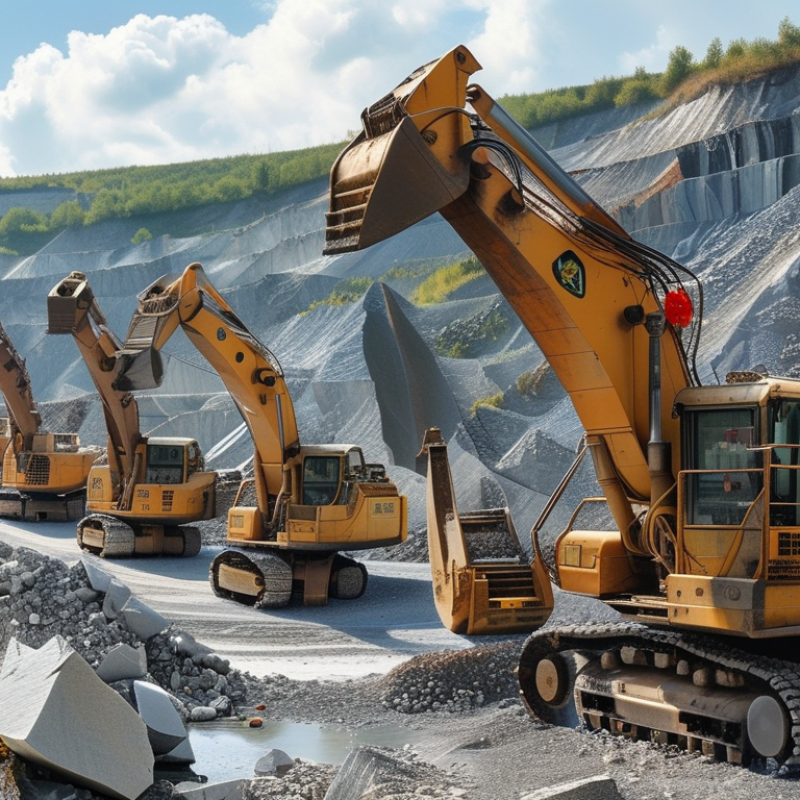
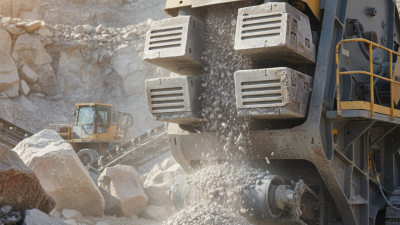
Jaw crusher basics begin with compression. A fixed jaw and a moving jaw squeeze rock inside a tapered chamber. Fine crushing uses a tighter discharge setting, often after primary reduction. It produces a more controlled feed for screens, cone crushers, mills, or aggregate plants. However, a jaw crusher is not automatically a fine crusher. Feed size, hardness, moisture, and chamber geometry decide the result. The U.S. Geological Survey reported about 1.5 billion metric tons of crushed stone production in the United States in 2024, showing why consistent size control matters in large material flows.
For global buyers comparing fine jaw crusher types, single-toggle and double-toggle designs deserve careful testing. Single-toggle units often offer a simpler structure and lower weight. Double-toggle units can provide strong compression for abrasive rock, but may demand more maintenance. Laboratory and compact versions suit sampling, while heavy-duty models handle quarry feed. A smaller discharge opening can improve fineness, yet it may reduce capacity and increase wear. That trade-off is easy to underestimate. World Mining Data 2024 also shows the continuing scale of global mineral production, but production volume alone cannot predict crusher performance. Site tests remain more reliable than catalogue figures.
Tips: Ask for a measured feed analysis, not only a maximum lump size. Check moisture, clay content, and the percentage passing the target size. Request wear-life data from comparable rock. Leave room for uncertainty; real quarry feed changes daily.
| No. | Jaw Crusher Type | Operating Principle | Typical Fine-Crushing Range* | Best-Suited Materials | Main Advantages | Common Limitations | Typical Applications |
|---|---|---|---|---|---|---|---|
| 1 | Single-Toggle Jaw Crusher | A single toggle plate transmits motion from the eccentric shaft to the moving jaw, producing a combined compressive and rubbing action. | Approximately 10–50 mm closed-side setting; final product often includes a substantial fine fraction. | Soft to medium-hard rock, limestone, recycled concrete, and construction aggregates. | Compact design, comparatively low weight, good reduction, and efficient operation at moderate capacities. | Greater wear on some components when processing highly abrasive feed; not usually selected for the largest primary duties. | Quarries, recycling plants, small and medium aggregate operations, and pre-crushing circuits. |
| 2 | Double-Toggle Jaw Crusher | Two toggle plates create a more direct compressive crushing motion with a relatively low jaw movement at the discharge area. | Approximately 25–75 mm closed-side setting, depending on feed size and machine design. | Hard, abrasive rock such as granite, basalt, and high-strength ore. | Robust frame, high mechanical reliability, and good suitability for demanding primary crushing conditions. | Heavier and more complex than a single-toggle design; generally higher capital and maintenance requirements. | Hard-rock quarries, mining operations, and applications requiring durable primary reduction. |
| 3 | Blake Jaw Crusher | The moving jaw is pivoted at the top, while the lower jaw area performs the principal crushing movement. | Usually about 25–75 mm closed-side setting in conventional applications. | Large, hard rock feed and run-of-mine ore. | Strong top-opening geometry, effective acceptance of large feed, and stable primary crushing performance. | Lower crushing motion near the feed opening can reduce capacity compared with some modern high-speed configurations. | Traditional mining and quarrying primary-crushing stations. |
| 4 | Dodge Jaw Crusher | The moving jaw is pivoted at the bottom, causing the upper opening to move more than the lower discharge area. | Commonly around 10–40 mm for small-scale or laboratory-size equipment. | Brittle minerals, sample material, and relatively low-abrasion feed. | Can produce a relatively consistent discharge size in controlled, low-throughput work. | Tendency to choke at the bottom; limited suitability for high-capacity industrial operation. | Laboratories, educational facilities, and specialized small-batch crushing. |
| 5 | Overhead-Eccentric Jaw Crusher | An eccentric shaft above the crushing chamber drives the moving jaw in an elliptical path. | Approximately 10–50 mm closed-side setting for fine aggregate or secondary-preparation duties. | Aggregate, limestone, recycled asphalt, concrete, and moderately hard rock. | Good material flow, adjustable product sizing, and broad availability in stationary and portable forms. | Wear and power demand increase with abrasive or highly competent feed; product shape depends on operating conditions. | Aggregate production, road-base recycling, and compact crushing plants. |
| 6 | Hydraulic-Adjustment Jaw Crusher | Hydraulic cylinders adjust the jaw setting and can provide overload relief when uncrushable material enters the chamber. | Approximately 10–50 mm closed-side setting, subject to chamber geometry and feed conditions. | Hard rock, ore, recycled concrete, and feed with occasional tramp metal risk. | Fast setting changes, improved overload protection, and easier control of the target product size. | Hydraulic systems require inspection, clean fluid, and qualified maintenance. | Automated mining, quarrying, recycling, and plants with frequent product-size changes. |
| 7 | High-Speed Fine Jaw Crusher | A higher eccentric speed and optimized chamber profile increase crushing events and improve fine-particle generation. | Approximately 8–30 mm closed-side setting, depending on the material and circuit design. | Soft to medium-hard minerals, limestone, shale, and selected recycled materials. | Higher reduction potential and improved suitability for producing smaller feed to a secondary crusher or mill. | Higher speed can increase wear, fines generation, and sensitivity to feed segregation or overloading. | Fine-preparation circuits, mineral processing, and compact aggregate plants. |
| 8 | Laboratory Fine Jaw Crusher | A small jaw chamber applies controlled compression to prepared samples, normally with an adjustable discharge gap. | Typically about 2–10 mm closed-side setting for sample preparation. | Geological samples, ores, ceramics, glass, and other small dry batches. | Repeatable sample preparation, small footprint, and straightforward size adjustment. | Very low throughput; unsuitable for large feed or continuous heavy-duty production. | Mining laboratories, quality-control rooms, research, and educational testing. |
| 9 | Portable Fine Jaw Crusher | A jaw crusher is mounted on a movable chassis or trailer so the crushing unit can be relocated between work areas. | Approximately 15–50 mm closed-side setting for mobile aggregate and recycling circuits. | Construction waste, demolition concrete, limestone, and natural rock. | Reduced hauling distance, flexible site deployment, and integration with mobile screening equipment. | Limited by transport dimensions, power availability, site access, and setup requirements. | Temporary quarries, demolition sites, road projects, and decentralized recycling. |
| 10 | Tracked Fine Jaw Crusher | A self-propelled tracked chassis carries the jaw, feeder, and discharge conveyor for movement directly around a site. | Approximately 15–50 mm closed-side setting, depending on the chamber and feed. | Demolition material, recycled concrete, blasted rock, and mixed construction feed. | Excellent site mobility, minimal foundation work, and efficient processing close to the excavation or demolition area. | Higher purchase and operating complexity than a basic stationary unit; production depends on ground conditions and logistics. | Urban demolition, infrastructure projects, mining benches, and short-term crushing campaigns. |
*Closed-side setting ranges are typical indicative values rather than universal specifications. Actual product size, capacity, and fine-particle content depend on feed gradation, material strength, moisture, chamber design, jaw profile, operating speed, and screening configuration. A jaw crusher is generally used for primary or secondary reduction; a cone crusher, impact crusher, roll crusher, or grinding mill may be required when a substantially finer final product is needed.