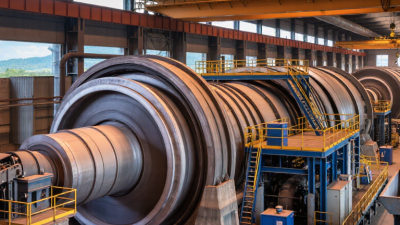
Choosing a Semi-Continuous Grinding Ball Mill supplier is not a simple ranking exercise. Buyers need equipment that fits their ore, throughput targets, site conditions, and maintenance capacity. A mill that performs well in a supplier’s reference plant may behave differently with another feed size or moisture level. Small details matter: liner access, drive configuration, spare-parts lead times, and the clarity of commissioning support. Not just capacity.
Dr. Barry Wills is a recognized mineral-processing author. A useful equipment-selection principle consistent with mineral-processing fundamentals discussed in his work is: “Match the mill to the process, not the process to the brochure.” This is an editorial paraphrase, not a verbatim quotation. It captures a practical caution: published figures need context. Ask suppliers for comparable operating references, defined test conditions, and clear assumptions behind energy and output estimates. A polished specification sheet is not enough.
This guide compares ten suppliers for global buyers, with attention to product scope, customization, service reach, and evidence of operating experience. It is intended as a starting point, not a substitute for engineering due diligence. Supplier information can change, and some claims may be difficult to compare directly. That is worth admitting. Before shortlisting, confirm the mill’s feed and discharge arrangement, required capacity, installation constraints, and local support options. A careful comparison can reveal a better fit—and expose unanswered questions before they become costly ones.
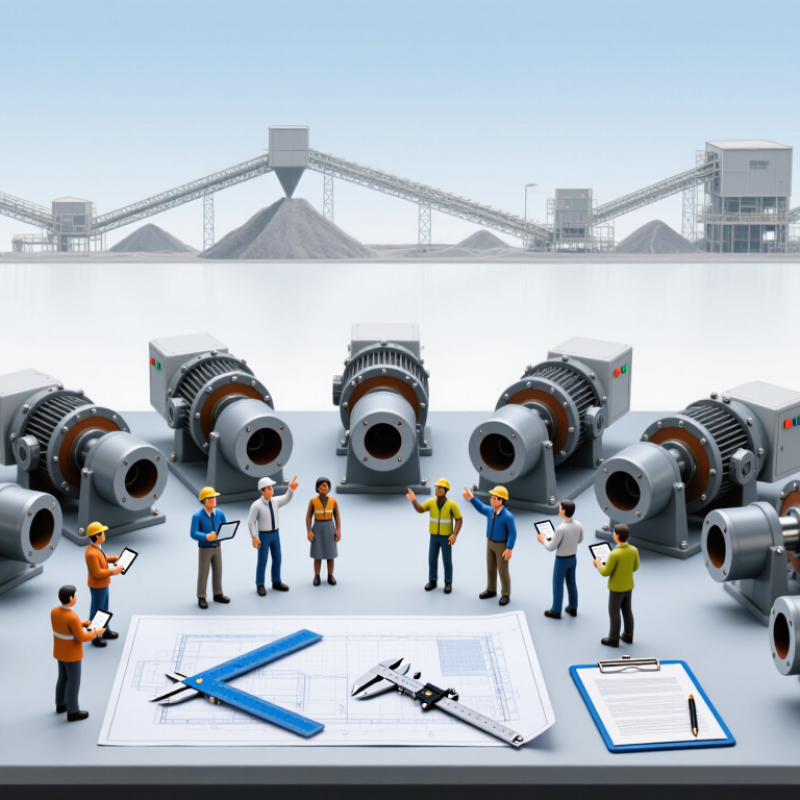
Semi-continuous ball milling combines measured batch feeding with scheduled, controlled discharge. The mill receives a defined charge, then releases slurry or product at intervals rather than running as a fully continuous circuit. This arrangement can help operators manage feed variation and observe how particle size changes after each cycle. On the control panel, feed mass, mill load, discharge timing, and product size should be reviewed together. One number rarely tells the whole story.
Energy deserves close attention. The U.S. Department of Energy’s 2007 Mining Industry Energy Bandwidth Study estimated annual U.S. mining energy use at roughly 1.3 quadrillion Btu and identified comminution as a significant energy demand. For buyers comparing suppliers, request test results in kilowatt-hours per tonne, alongside feed size, target fineness, and operating conditions. Ask how discharge intervals are controlled, and how the system responds when feed moisture or hardness changes. That response matters. Semi-continuous operation is not automatically more efficient; poorly chosen pauses can reduce throughput, while uneven batches can distort test results. A pilot trial helps, though even a well-run trial may not capture every shift in real feed.
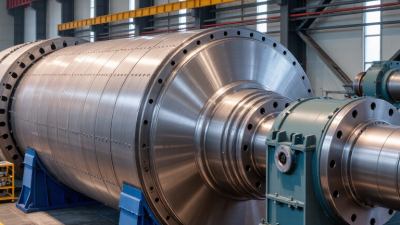
For global buyers comparing semi-continuous grinding ball mill suppliers, ask for operating data at 65–75% of critical speed. Critical speed is the point where centrifugal force holds balls against the shell. The practical range supports cascading motion, but ore hardness, liner design, and mill diameter can shift the best setting. Wills and Finch’s Mineral Processing Technology (2016) and Napier-Munn et al.’s Mineral Comminution Circuits (1996) detail how mill dynamics affect grinding performance. Treat the range as a trial window, not a guarantee.
Charge filling of 25–35% of the mill’s internal volume is another useful comparison benchmark. At the lower end, balls may strike less often; at the upper end, crowded media can reduce effective movement. Picture a steady curtain of balls lifting and falling, not a packed drum. Austin, Klimpel, and Luckie’s Process Engineering of Size Reduction (1984) discusses the links among media load, motion, and breakage. Small changes matter.
Request test results showing speed, filling, feed size, product size, and power draw together. Compare results using the same ore and measurement method. A supplier’s headline capacity can hide a mismatch in feed conditions. There is no perfect setting. I’d also question any quote that reports a single “optimum” without describing its test ore; that detail is often missing. Short trials help, but production behavior can still differ.
A useful comparison of ten semi-continuous grinding ball mill suppliers starts with the duty, not the brochure. Record each unit’s rated throughput in tonnes per hour and the ore conditions behind that figure. Feed-size limits matter too: a mill rated for coarse feed may need different upstream crushing than one designed for finer material. The International Energy Agency’s Global Critical Minerals Outlook 2024 reports that average copper ore grades have fallen about 40% since 1991. That trend makes realistic throughput and energy assumptions especially important. Bigger is not always better.
Compare motor power alongside throughput, then ask suppliers to state the operating conditions used for both figures. Check whether quoted power covers the mill drive alone or the wider grinding circuit. Request service coverage in practical terms: technician response time, spare-parts location, commissioning support, and remote diagnostics. These details can outweigh a small difference in rated capacity. A polished datasheet can still leave gaps; I would verify the figures against a site-specific test.
Tips: Use one ore sample and one target product size when requesting quotations. Put throughput, feed size, motor power, and service response in the same comparison table. Flag missing assumptions instead of treating them as zero.
When comparing semi-continuous grinding ball mill suppliers, ask for test data tied to your ore, not just a capacity figure. A Bond Work Index result estimates ore resistance to grinding under a defined laboratory procedure. It does not, by itself, predict full-scale mill output. Ask for the test method, sample source, feed size, and laboratory conditions. Numbers need context.
Check the reported P80, the size through which 80 percent of the product passes. Request the full particle-size distribution, not only one target value. A sample with a P80 of 150 microns may still contain coarse particles that affect downstream recovery. For a fair comparison, confirm that suppliers used comparable ore, feed moisture, throughput, and sampling methods. Small differences matter. Semi-continuous tests can also show feed and product fluctuations that a single average hides.
Request dated reports, equipment settings, and repeat-test results where available. Ask how operators measured feed rate and collected product samples; poor sampling can make precise figures misleading. Compare energy use and throughput only when test conditions are clearly stated. If a claim lacks raw data, treat it as unverified, not as proof of poor performance. That distinction deserves attention.
When comparing semi-continuous grinding ball mill suppliers, check whether their ISO 9001 certificate covers the actual manufacturing site and relevant production processes. A certificate alone does not prove that a mill suits your ore, throughput, or operating conditions. Request the certificate’s scope and a sample inspection record. For CE marking, ask which equipment configuration it applies to and what technical documentation is supplied. Details matter.
Tips: Ask for written lead times on liners, bearings, seals, and drive components. Confirm whether parts are stocked regionally or shipped from the factory. A quoted “two-week” delivery can mean something different when customs, packing, or local transport are excluded.
Before placing an order, request a spare-parts list with part numbers and recommended quantities. Compare the supplier’s stated dispatch time with your site’s acceptable downtime, then clarify how urgent requests are handled. If a response is vague, follow up in writing; this can feel tedious, but it creates a useful record. Also ask how remote troubleshooting works across time zones. Readiness is not just paperwork or a promise. It is the ability to provide clear documents, compatible parts, and practical support when production is waiting.
Use these illustrative lead-time targets when assessing semi-continuous grinding ball mill suppliers. They are buyer-set screening benchmarks, not supplier-reported averages.
How to assess: Verify an active ISO 9001 quality-management certificate. Check CE marking only where the equipment falls under applicable EU legislation; it is not a universal supplier credential. Confirm critical and standard spare-parts lead times in writing, including destination, stock status, and shipping terms.