


0102030405


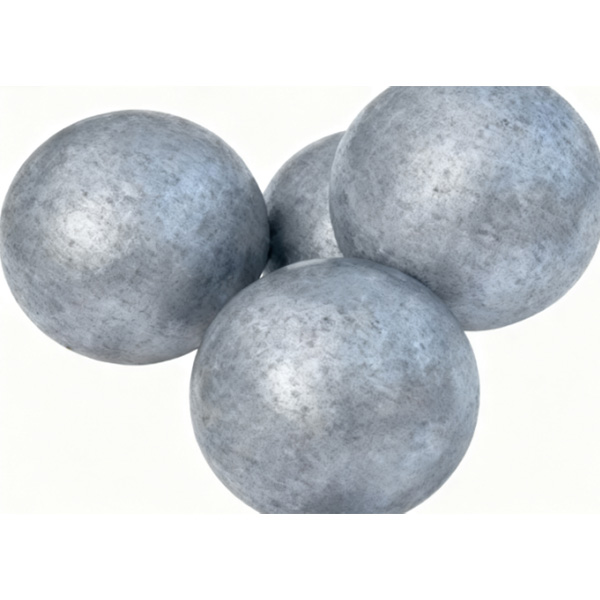
High Manganese Steel Balls from China Suppliers | Durable Factory-Direct Solutions for Mining, Cement, and Metallurgy
Product Introduction
High manganese steel balls are efficient and wear-resistant grinding media, specially designed for ball mills in mining, cement, metallurgy and other industries, mainly used for material grinding and crushing.
Main technical parameters
| Element(元素) | Content(含量)(%) | Element(元素) | Content(含量)(%) | Element(元素) | Content(含量)(%) | Element(元素) | Content(含量)(%) |
|---|---|---|---|---|---|---|---|
| C | 0.60-0.78 | Si | 0.25-0.65 | Mn | 0.65-1.33 | Cr | ≤0.45 |
| P | ≤0.035 | S | ≤0.035 |
Frequently Asked Questions (FAQ)
What are the primary applications of high manganese steel balls?
High manganese steel balls are widely used as grinding media in ball mills across mining, cement production, metallurgy, and chemical industries. They are highly efficient for crushing and grinding various raw materials and ores.
Why are high manganese steel balls highly wear-resistant?
The chemical composition, featuring balanced levels of Carbon (C), Manganese (Mn), and Chromium (Cr), provides excellent impact toughness. Under continuous impact during operation, the surface work-hardens, significantly increasing its wear resistance.
What is the significance of the low phosphorus (P) and sulfur (S) content?
Phosphorus and sulfur are kept below 0.035% to prevent brittleness in the steel. Low levels of these elements ensure that the grinding balls maintain high impact toughness and do not break easily under high-stress conditions.
Are these grinding balls suitable for wet grinding processes?
Yes, the inclusion of Chromium (Cr ≤ 0.45%) and optimized heat treatment improves corrosion resistance, making them suitable for both dry and wet grinding environments in industrial ball mills.
How do high manganese steel balls optimize mill operational costs?
Due to their high wear resistance and low breakage rate, they extend the service life of the grinding media, reduce downtime for mill maintenance, and lower the overall cost per ton of ground material.